Why accreditation?
The article explores the critical role of accreditation in improving the quality, credibility, and competitiveness of Pakistan’s technical and vocational education se
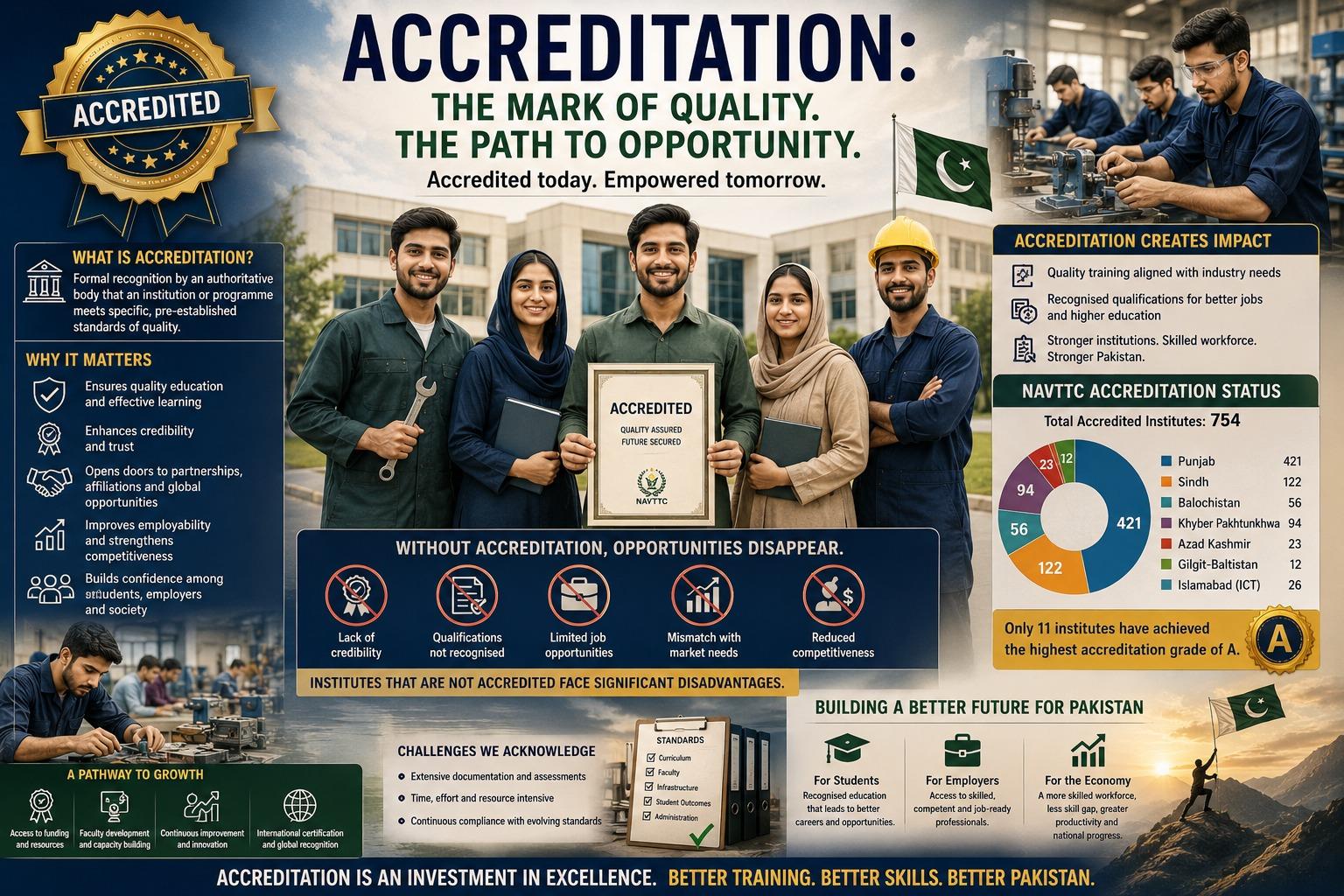
The article explores the critical role of accreditation in improving the quality, credibility, and competitiveness of Pakistan’s technical and vocational education sector. Accreditation is defined as the formal recognition granted to institutions or programmes that meet established quality standards in areas such as curriculum, faculty qualifications, infrastructure, teaching methods, student outcomes, and administration. It serves as an official assurance that an institution is capable of delivering education and training aligned with national and international standards.
The article argues that accreditation is essential for building trust among students, employers, funding bodies, and international partners. Accredited institutions enjoy stronger credibility, greater recognition of qualifications, improved opportunities for partnerships, and better employability outcomes for graduates. In contrast, institutions without accreditation face serious disadvantages, including lack of recognition, reduced student confidence, limited employment prospects for graduates, and misalignment between training and labour market demands.
The piece highlights the current accreditation landscape in Pakistan through data from the National Vocational and Technical Training Commission (NAVTTC). According to the article, 754 institutes across Pakistan have been accredited, with the majority located in Punjab, followed by Sindh, Khyber Pakhtunkhwa, Balochistan, Azad Kashmir, Gilgit-Baltistan, and Islamabad Capital Territory. However, only 11 institutions have achieved the highest A-grade accreditation status, reflecting both the quality challenges within the sector and the low number of institutes pursuing accreditation despite having strong potential.
The article further stresses that accreditation is increasingly linked to employability, international certification, and economic competitiveness. It recommends prioritising support and funding for institutions that hold at least a B-grade accreditation to ensure quality technical and vocational training that meets industry requirements. This becomes particularly important as Pakistan seeks to strengthen its skilled workforce and expand opportunities for domestic and overseas employment.
At the same time, the article acknowledges that accreditation is a demanding process involving documentation, self-assessment, audits, and continuous compliance with evolving standards. Resource limitations, especially for smaller institutions, make the process challenging. Nevertheless, the article argues that the long-term benefits significantly outweigh these difficulties.
Overall, the article presents accreditation as a strategic investment in Pakistan’s future workforce and economy. By strengthening accreditation systems, expanding institutional participation, and aligning training standards with global requirements, Pakistan can improve educational quality, reduce skill gaps, enhance workforce competitiveness, and create stronger pathways to employment and economic growth.