The master key
AS both young and old hunt for better employment opportunities, it is worth reflecting on these wise words: “If education is the key, technical-vocational education i
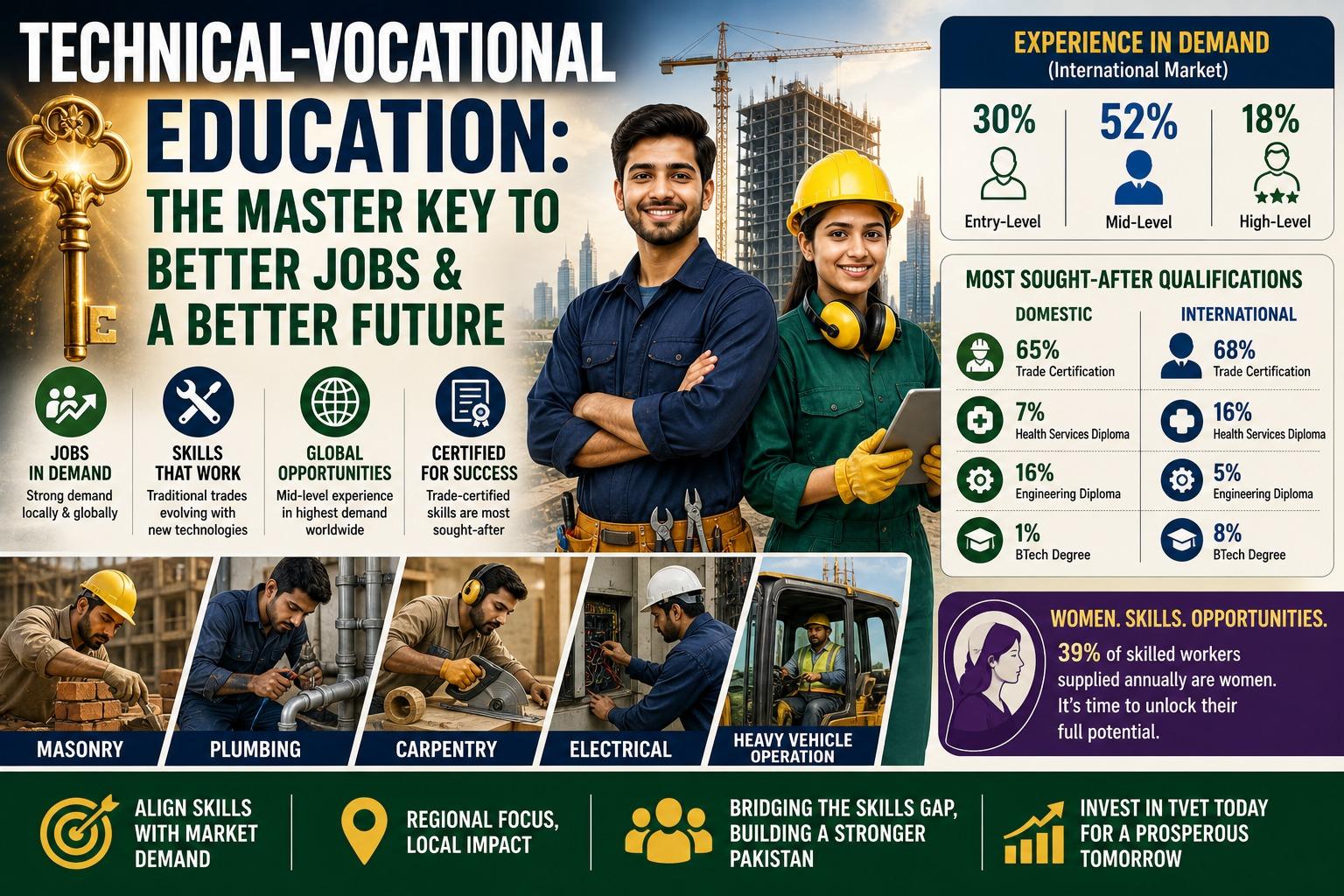
The article explores the evolving importance of technical and vocational education and training (TVET) in responding to changing labour market demands both within Pakistan and internationally. It argues that while digital and IT skills are increasingly important in the modern economy, traditional trades such as plumbing, carpentry, masonry, electrical work, and machine operation continue to remain highly relevant and are themselves evolving through the integration of smart technologies and energy-efficient practices.
A key focus of the article is the growing demand for certified vocational skills. Data cited in the article indicates that trade certifications are among the most sought-after qualifications in both domestic and international labour markets. Employers increasingly prefer workers with mid-level practical experience, highlighting the need for vocational systems that produce job-ready graduates rather than purely academic qualifications.
The article also identifies significant mismatches between labour market demand and the current supply of skilled workers in Pakistan. Fields such as driving, mechanics, welding, masonry, and machine operation face major shortages despite strong demand. Many of these trades are either underrepresented or insufficiently prioritised within existing TVET programmes, creating a widening skills gap that affects both national productivity and overseas employment opportunities.
Another important issue raised is gender imbalance within skilled labour markets. While women account for a substantial portion of Pakistan’s annual supply of trained workers, labour market demand remains overwhelmingly male-dominated, especially internationally. The article highlights the urgent need for reforms aimed at increasing women’s participation in technical professions and creating more inclusive pathways into skilled employment.
Sectoral differences between domestic and international labour demand are also examined. Construction dominates international skilled labour demand, while manufacturing and services are more prominent domestically. These trends suggest that Pakistan’s vocational training system must become more adaptive and aligned with changing economic realities.
The article ultimately argues that vocational education should not follow a one-size-fits-all approach. Instead, it calls for regionally tailored and market-responsive training programmes designed around local economic needs and industry demands. The National Vocational and Technical Training Commission (NAVTTC) is identified as a key institution responsible for addressing labour market imbalances, modernising training systems, and aligning skills development with economic transitions.
Overall, the article presents TVET as a critical driver of employment, economic growth, and workforce competitiveness. By modernising vocational training, addressing gender disparities, and aligning programmes with real market demand, Pakistan can strengthen its skilled workforce and better position itself in both domestic and global labour markets.