Sudden freeze
The article examines the far-reaching consequences of former US President Donald Trump’s decision to freeze American foreign aid for 90 days, particularly for South A
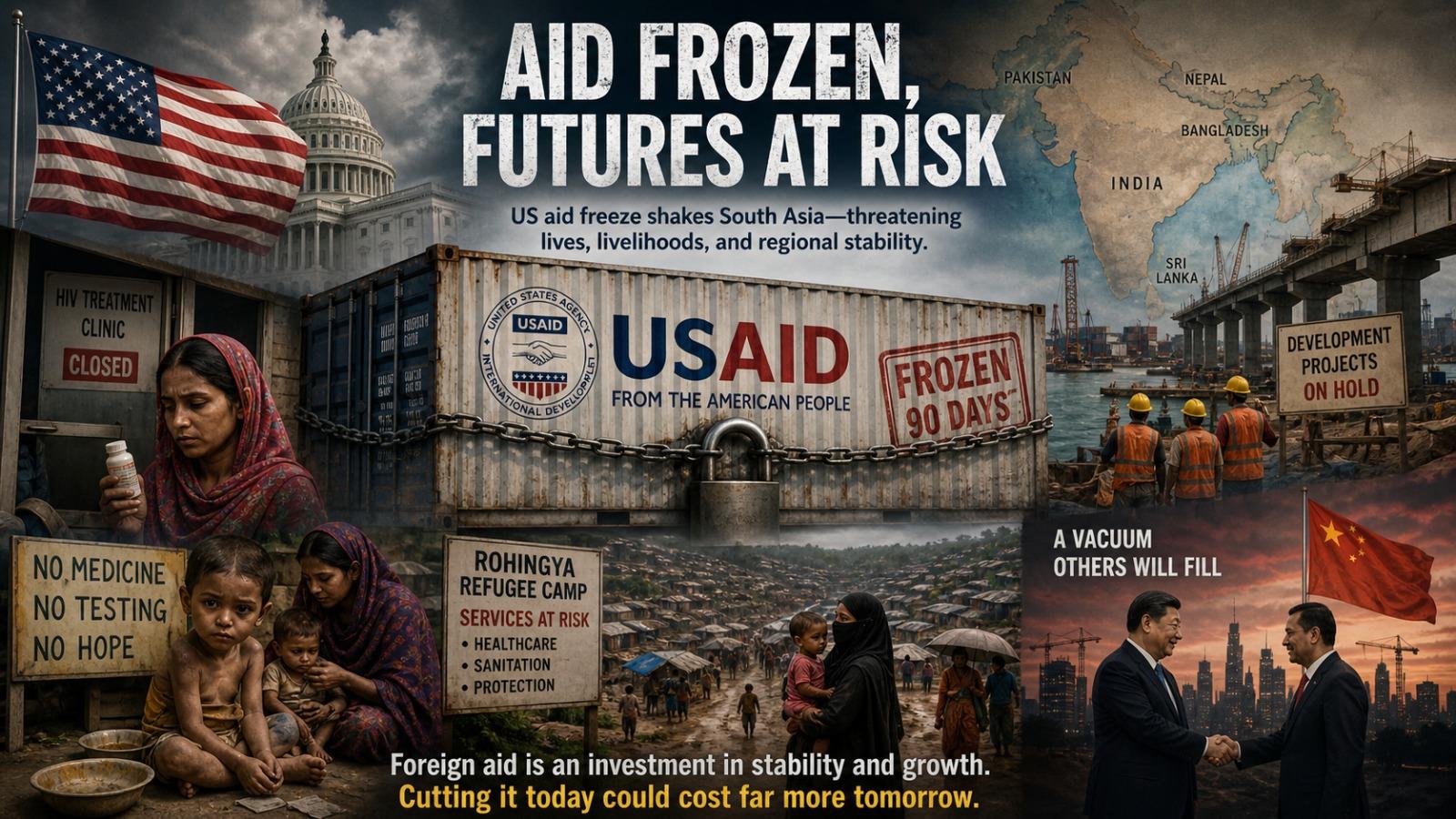
The article examines the far-reaching consequences of former US President Donald Trump’s decision to freeze American foreign aid for 90 days, particularly for South Asia — a region heavily dependent on US assistance for economic development, healthcare, humanitarian relief, and security cooperation. Although the move was presented as a domestic cost-cutting measure, the article argues that its implications extend well beyond finances and could significantly reshape regional stability and geopolitics.
South Asia has historically benefited from extensive US-funded initiatives, including infrastructure development, counterterrorism cooperation, healthcare programmes, and food security projects. The sudden suspension of aid threatens to disrupt ongoing development efforts, stall infrastructure projects, and weaken economic growth across countries such as Pakistan, Bangladesh, Nepal, and Sri Lanka. The article also highlights the risk posed to export-driven industries, particularly as the US simultaneously considers higher tariffs on key regional exports like pharmaceuticals and textiles.
A major concern raised in the article is the impact on public health and humanitarian programmes. Critical healthcare initiatives, including HIV treatment and testing funded through American assistance, are already experiencing service reductions. Food aid and nutritional support programmes for vulnerable populations may also face severe setbacks. The situation is particularly alarming for Rohingya refugees in Bangladesh, where over a million displaced people rely heavily on international aid for healthcare, sanitation, and protection services.
Beyond humanitarian and economic effects, the article frames the aid freeze as a strategic geopolitical mistake. It argues that reduced US engagement could create a vacuum in South Asia that China is prepared to fill through its Belt and Road Initiative and expanding regional investments. This shift may strengthen Beijing’s influence over trade, infrastructure, and political alliances in the region while weakening long-standing US strategic partnerships, including security cooperation with Pakistan.
Overall, the article presents foreign aid not merely as charity, but as a strategic investment in stability, economic growth, and global influence. It warns that the abrupt withdrawal of US support risks increasing instability in South Asia while accelerating China’s rise as the region’s dominant external partner.