Empowering workers
The article highlights the transformative potential of Pakistan’s Recognition of Prior Learning (RPL) certification framework in strengthening the country’s workforce
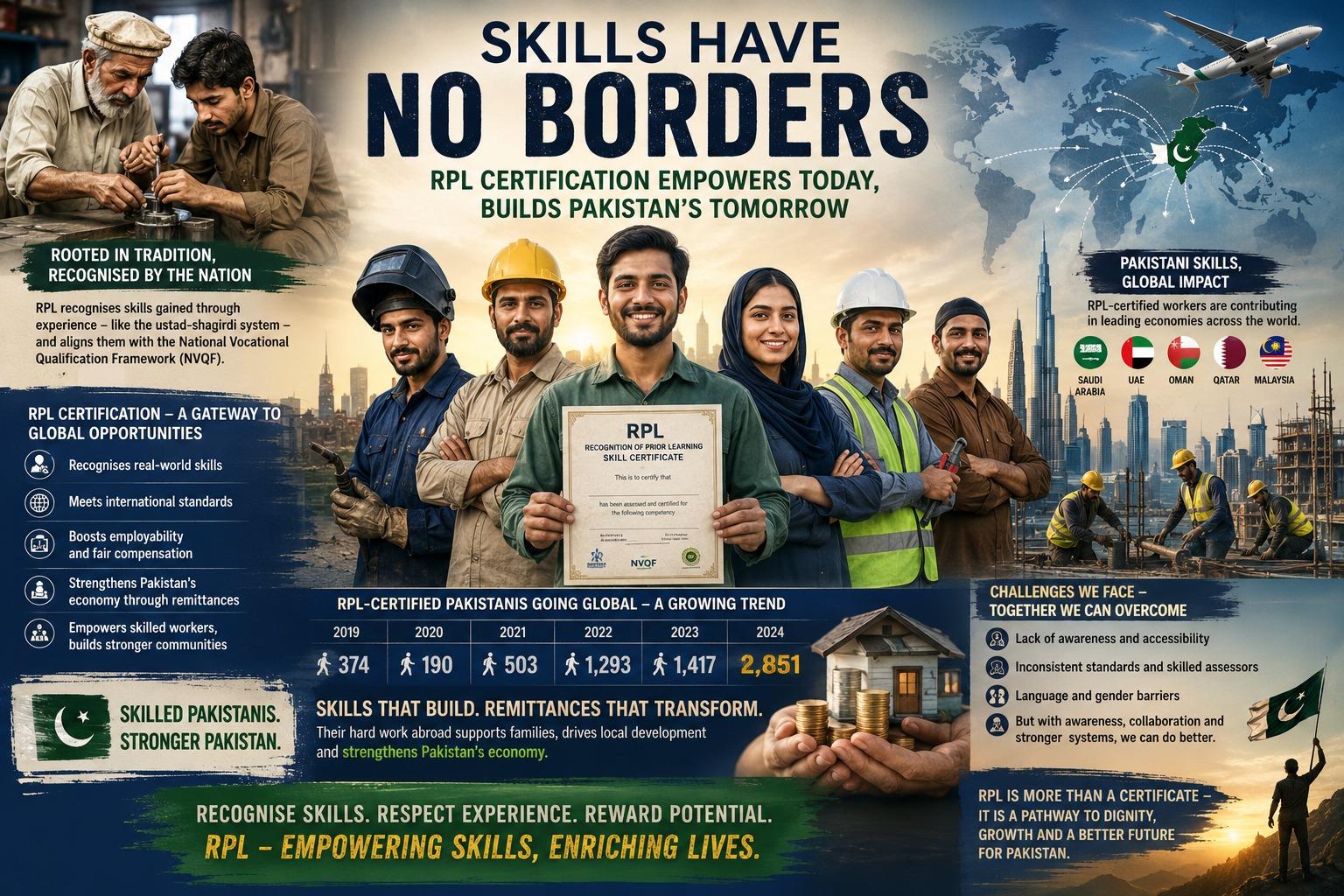
The article highlights the transformative potential of Pakistan’s Recognition of Prior Learning (RPL) certification framework in strengthening the country’s workforce and positioning skilled labour competitively in the global economy. As international labour markets increasingly value certified technical expertise, the RPL initiative offers Pakistan an opportunity to formally recognise the capabilities of workers who have acquired skills through informal systems such as the traditional ustad-shagirdi model.
RPL functions by assessing and certifying skills gained through non-formal training and practical work experience, aligning them with Pakistan’s National Vocational Qualification Framework (NVQF). This process bridges the gap between informal expertise and formal employability, enabling workers to secure internationally recognised qualifications that improve access to overseas employment, fair wages, and better career opportunities.
The article presents growing evidence of the programme’s impact. According to NVQF Registry and Bureau of Emigration and Overseas Employment data, the number of Pakistanis obtaining overseas employment through RPL certification has steadily increased from 374 workers in 2019 to 2,851 in 2024. Certified workers are contributing to Pakistan’s economy through remittances while supporting families and local communities. Key sectors benefiting from RPL certification include plumbing and solar water heating technology, welding, masonry, HVACR, electrical work, construction, and automobile mechanics.
The article also identifies important regional and structural trends. Workers from Islamabad Capital Territory and Punjab dominate overseas placements, while provinces such as Balochistan remain significantly underrepresented. At the same time, challenges continue to hinder the programme’s expansion, including limited public awareness, inconsistent assessment standards, lack of access to testing centres, language barriers, gender inequality, and shortages of qualified assessors.
Despite these obstacles, the article argues that RPL represents more than a certification mechanism; it is a strategic national development tool capable of empowering Pakistan’s skilled but often under-recognised workforce. The National Vocational and Technical Training Commission (NAVTTC) is working to improve outreach, simplify certification procedures, and build international partnerships to ensure global recognition of Pakistani certifications.
Overall, the article concludes that strengthening the RPL ecosystem can enhance Pakistan’s economic resilience, increase global workforce competitiveness, and unlock opportunities for millions of skilled workers whose expertise has historically remained outside formal systems.